Monday, February 25, 2013

Green River Reactors Revisited

I still stand by my original position on the Green River Reactors, but there have been recent developments in both my knowledge and politics since I have written last. My original article may be accessed by clicking here or by finding it in the site webpages list to the right under Utah Green River Reactors.

Many opponents of the Green River Reactors in Utah have pointed to a recent law that has been written up as grounds for why these reactors are ludicrous. The law is SB199.

Many opponents state that it is ridiculous as it proposes charging the taxpayers for the construction of the plant long before the plant is actually built. They also say that this is necessary for Nuclear Power Plants to be created because too few investors are willing to dish out billions of dollars in an investment that might fail.

They opponents then go on to say that while Nuclear Energy is Carbon Emission Free, it contains waste which we currently don't know how to deal with.

I will agree that it is ridicules to charge tax-payers for a service that isn't even present yet, however, the reason why people are too afraid to invest is because of opponents like these making these projects potentially risky investments. If the investors could be sure that it would actually be possible for the plant to be created, they would be more than happy to invest in it. It is only because of these environmentalist groups that people are too afraid to place any real investments in these companies.

It is completely true that Nuclear Energy Carbon Emission Free, and as for the claim that we don't know how to deal with Nuclear Energy: it is utterly ridicules. There are two process which would completely eradicate our Nuclear Energy problem: first, Reprocessing which would reuse many of the more dangerous and longer lasting elements and second, Vitrification which would transform the remaining radioactive elements into a much safer glass form. This glass could be stored underground for thousands of years while the remaining radioactive isotopes decomposed.

The twin process of Reprocessing and Vitrification could effectively eliminate all of our current problems with Nuclear Waste and many of the complaints about the energy source in general.

Thank you once again for reading.
_________________________________________________________________________________
Sources:

http://en.wikipedia.org/wiki/Vitrification

http://en.wikipedia.org/wiki/Nuclear_reprocessing

http://healutah.org/news/nuclearspeculation/02/21/13
_________________________________________________________________________________

Monday, February 18, 2013

Swaying Public Opinion

The single most important thing to do to reinstate Nuclear Energy as a viable energy source is to sway the opinion of the public as to the ability of Nuclear Energy to safely and effectively operate competitively with other energy sources.

What has been happening for far too long in the intellectual battle for and against Nuclear Energy is the opposition to the energy by groups that are uninformed in regards to Nuclear Energy. One such group are the average environmentalists.

Before you think that I'm just jumping onto a fairly large bandwagon by saying that environmentalists are idiots let me explain: I have no problem with environmentalists in particular. I don't think we should damage the environment anymore than is necessary either. It is only when they oppose what they by definition and practicality should be supporting that I have anything against them.

Nuclear Energy is clean and with Reprocessing, it can be even cleaner by removing 90% of the Nuclear Waste. It would cause a lot less environmental impact than implementing any Green Energy solutions would. For instance, the 20 square miles of Solar Panels or 1200 windmills to equivalate one Nuclear Power Plant would cause a lot more environmental damage. Yet they ignore this and continue to say that Nuclear Energy would cause more damage.

Another group that has hindered public opinion in regards to Nuclear Energy are politicians. Politicians fear supporting Nuclear Energy because they are worried (especially in the wake of Fukushima) that any support for it will result in loss of election and voters. They are worried that if they support Nuclear Energy they will lose voters in other electrical areas such as Coal and Natural Gas as well as lose public favor.

If you notice, politicians almost never mention Nuclear Energy in energy needing development and growth in our country. They will generally say something like: "We need to expand all of our energy capabilities: Fossil, and Clean and Renewable." Now, Nuclear may be classified under Clean and Renewable for all I know, but it certainly is not what they are trying to make you think when they say it.

And the above example is if the politicians do not openly oppose Nuclear Energy. Many politicians come out and say that they are against it completely.

Between the environmentalists and the politicians it is a wonder that anything gets done with Nuclear Energy.

Oh wait--it doesn't.

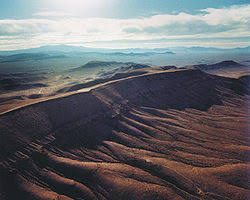
Take for instance Yucca Mountain, Nevada which at one point Congress wanted to make a Nuclear Repository for all of the United State's waste to be stored at. Between environmentalist protesting and political subterfuge the project was never completed despite the fact that there was no real reason why the plan shouldn't go through.

And now, the Government is paying out millions of dollars each year to make up for not following through on a contract it signed with energy companies years ago in the form of fines for directly failing to meet the contract, and subsidies to help pay for the storage and management of the Nuclear Waste which could be much better dealt with if Reprocessing and not Storage received subsidies.

The two groups of environmentalists and politicians have succeeded in making a country fearful of Nuclear Energy while not really giving any reason to be afraid. An irrational fear which was only solidified when Fukushima occurred in 2011.

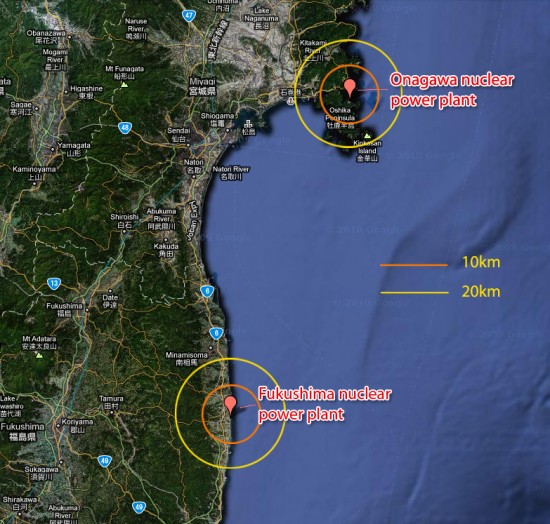
The funny thing about Fukushima is that Onagawa, which was a Nuclear Power Plant even closer to the epicenter of the 9.03 Earthquake and subsequent Tsunami, was perfectly fine. The only difference between Fukushima and Onagawa was that Onagawa had a higher seawall than Fukushima. Well, if we're going to put Nuclear Power Plants on islands, it's probably a good idea to have a really high seawall. Especially in areas frequented by large earthquakes such as Japan is.

And yet, politicians, intellectual opponents to Nuclear Energy, and environmentalists have used Fukushima as grounds to point out that Nuclear Energy is much too dangerous. That Nuclear Energy should be feared, and avoided. The sad thing is that to the average citizen of the United States, they appear to have succeeded in instating this fear.

It is necessary to overcome this fear for Nuclear Energy to be considered a viable energy source by the citizens of the United States and for Nuclear Energy to be used more in the United States.

Thank you for reading.

_________________________________________________________________________________
Sources:

http://casenergy.org/nuclear-energy/why-nuclear/clean/

http://en.wikipedia.org/wiki/Yucca_Mountain_nuclear_waste_repository

http://en.wikipedia.org/wiki/Onagawa_Nuclear_Power_Plant

_________________________________________________________________________________


Monday, February 11, 2013

The Biggest Problem Facing Nuclear Energy

I was asked what the single biggest problem of implementing Nuclear Energy in Utah is. The answer: skepticism. Skepticism of Nuclear Energy by the majority of people.

Skepticism is not in itself a bad thing. It is good in a great many things. Without doubt a great many scientific discoveries and advances could not be made. It is only when this skepticism is uninformed that is becomes a problem and in the case of Nuclear Energy is has become a case of public skepticism and consent that it won't work by so many people that few people even consider it a viable energy solution even though they lack many of the facts regarding Nuclear Energy.

Why does this skepticism exist? For various reasons. These include the medias common derision of Nuclear Energy, a few terrible accidents such as Chernobyl, Fukushima, and 3-Mile Island, and problems in dealing with Nuclear Waste.

I will honestly say that I am really annoyed when all of these are used to completely disregard the use of Nuclear Energy as a whole.

Nuclear Energy is often ridiculed by people seeking for an easy way out. They do this because they do not understand what they are talking about and so instead take an easy way out by just spouting something that "everybody knows" and that people will find funny while being derisive towards Nuclear Energy.

This is a futile effort to avoid learning what they fear they will find if they start researching. And that's if it's not because they're too lazy to actually research the information in the first place. A question I often ask myself when hearing contrary arguments is: "Would I be willing to spend my time on this as a full explanation?" If the answer is no because I would break into tears from either boredom, stupidity, or because it's slightly funny but utterly illogical: then it's a waste of time. If the answer is yes then it at least deserves some of my time and effort in thinking about it.

I could go through Chernobyl and explain all of the multitude of dumb things that occurred there, but the Wikipedia page does a much better job than ever I could. I will suffice to say, that Chernobyl happened due to an intent on performing an unwarranted experiment that they didn't follow the plan for anyway. This was the Soviet Union and the experiment wasn't warranted! That should tell you something about it already. Then, a variety of things happened. A notable occurrence was how the Soviet Union did not inform anyone else about the disaster until a Nuclear Power Plant in Sweden received insane radiation amounts that probably freaked the workers out there for a minute.

Had the Soviet Union access to appropriate Nuclear Disaster Response Agencies, the scale of this disaster would have been drastically decreased. In a response to a scientific article on Nuclear Disasters and lessons learned from them, John F. Ahearne a member of the NRC stated much the same thing when he said there was a "necessity to develop coordinated government/industry response procedures and [a] willingness to address the severe accident analyses..." or else, "close the plants.".

Also in this article John F. Ahearne points to the Onagawa Nuclear Power Plant which was located close by to Fukushima and which suffered little if any of the consequences that the Fukushima Power Plant suffered, despite the closeness of the plants, due to a well constructed seawall for the area the disaster occurred in and proper shut-down techniques.

Once again, 3-mile Island was due to poorly trained personnel leading to a computer reading error that was largely stupidity that would likely not occur with today's computers.

Another funny thing in this area of criticism is that I at least have never heard of a Nuclear Reactor problem on any of the ships in our navy. Properly trained personnel is what I'm accrediting that success to. This would lead to proper response abilities and low likely hood of something going wrong in the first place.

I have already dealt with the problem of Nuclear Waste and that can be viewed elsewhere in this blog. I'll give you a hint: it's got a lot to do with Reprocessing. You can reach my Nuclear Waste post by clicking here.

Hopefully spreading the information provided here will help people to research and come to their own educated conclusions regarding Nuclear Energy. I know it's helped me, and I know what conclusion I have reached. Namely that Nuclear Energy should be used much more than it is currently with proper techniques.

Thank you once again for reading.
_________________________________________________________________________________
Sources:

Samet, Jonathan M.Ahearne, John F. "Lessons From Nuclear Disasters." Issues In Science & Technology 28.4 (2012): 17-18. Professional Development Collection.

http://en.wikipedia.org/wiki/Onagawa_Nuclear_Power_Plant

http://en.wikipedia.org/wiki/Chernobyl_disaster

http://en.wikipedia.org/wiki/Three_Mile_Island_accident

http://nuclearenergyforutah.blogspot.com/2012/12/nuclear-waste-disposal.html
______________________________________________________________________________________________________


Monday, February 4, 2013

Utah Air Quality in regards to Nuclear Energy

Many people are calling upon Utah legislators demanding better air-quality laws. This is hardly surprising given how several weeks ago it was so nastily polluted that the mountains were sometimes not visible. However, I propose that instead of demanding laws against idling your car such as was imposed in Salt Lake, that a much more reasonable alternative that might actually change the air-quality for the better would be to rely more heavily upon Nuclear Energy.

"But Utah doesn't have a Nuclear Power Plant," You might say, "And therefore, any excess energy to be derived from it would come from other states with little influence on the air pollution in our own."

That is why I am proposing (and have been proposing) the creation of a Nuclear Power Plant--if not several--right here in the State of Utah. As I have previously proven, Nuclear Energy has great potential for profit, for enlarging the economy, and for decreasing pollution levels. Not only that, but the increased revenue coming from a Nuclear Power Plant would be somewhat collected and recycled back to us indirectly in the form of taxes that could be used to create better roads, and improved education.

Currently, we have several Coal, Petroleum, and Natural Gas Power Plants as well as a variety of renewable energy source Power Plants here in Utah, but not a single Nuclear Power Plant.

Besides how the renewable energies do not produce the energy output necessary for the electricity requirements of our state, we have a unique position in air-quality requirements due to the mountains around us which trap in the pollutants quite easily.

For health's sake alone, disregarding the advantages of the lower cost, it would be practical to replace at least a couple of the more expensive, higher pollutant expelling Power Plants with Nuclear Power Plants.

Thank you for reading this week again.
_________________________________________________________________________________
Sources:

http://geology.utah.gov/emp/energydata/electricitydata.htm

http://nuclearenergyforutah.blogspot.com/2012/11/nuclear-energy-total-costs.html
_________________________________________________________________________________